Body Double
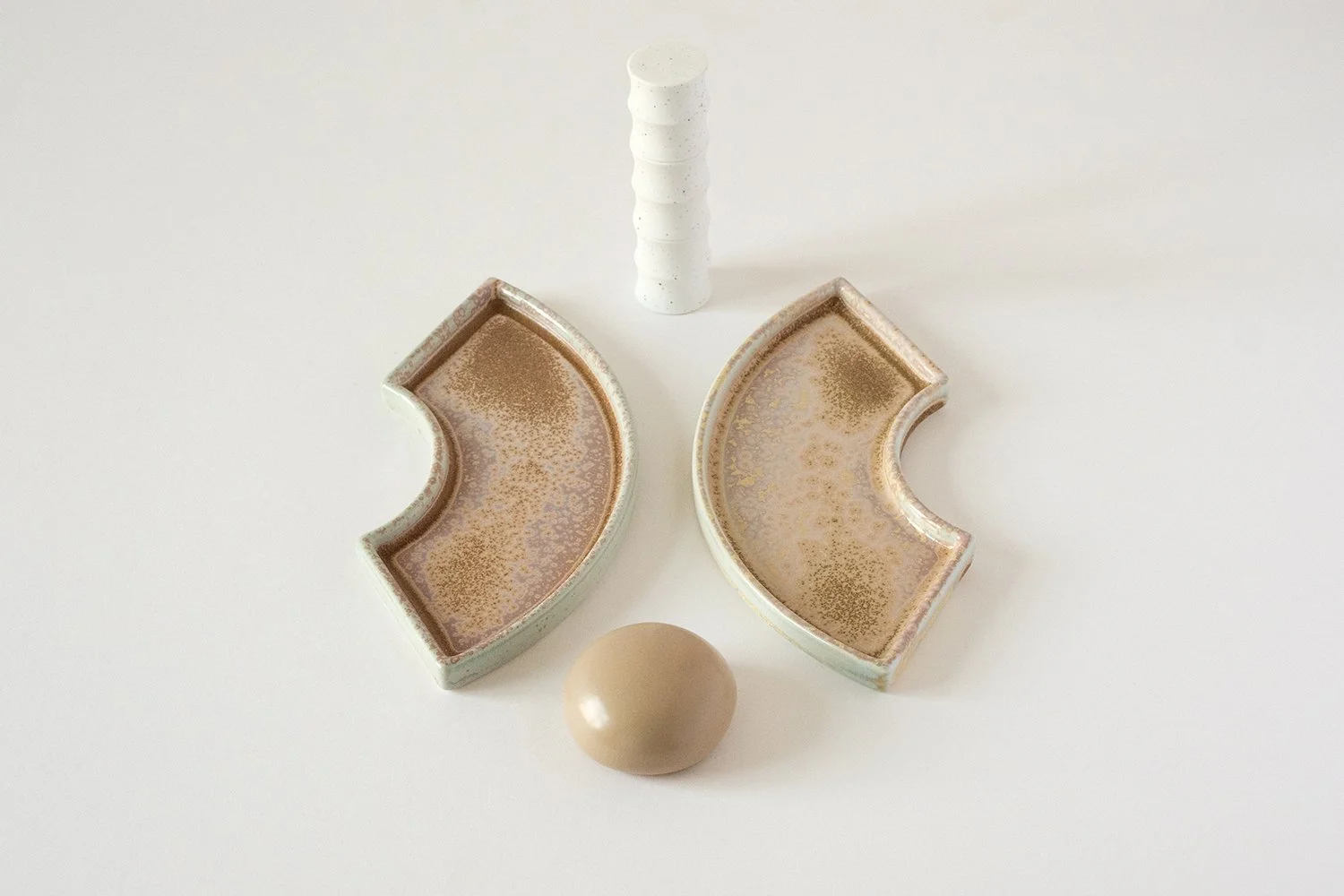
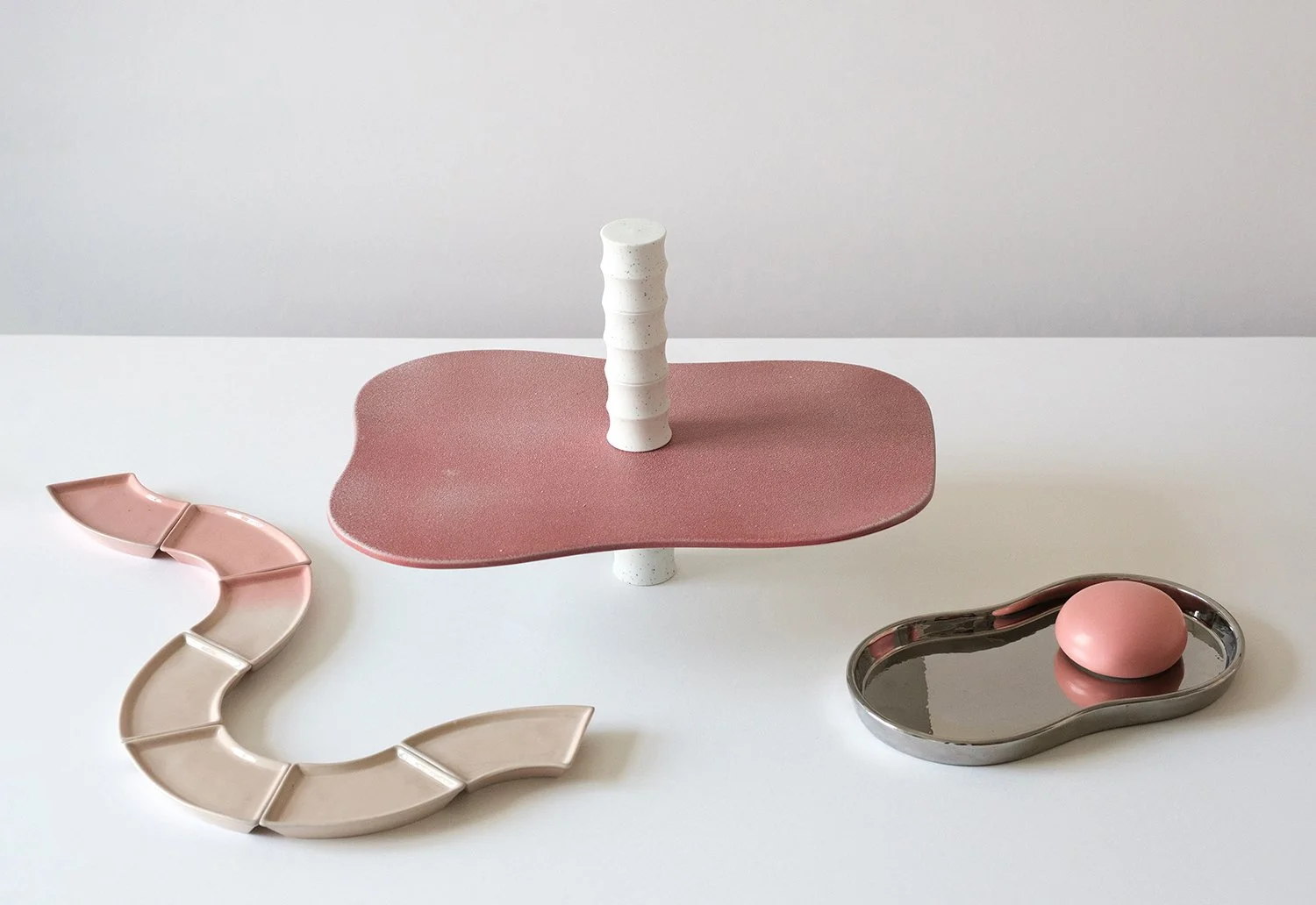
The works are composed from a combination of objects I made and bisque forms sourced from Jingdezhen’s material ecosystem, including trays, dishes, teapot lid stands, and modular components produced for functional use. These bisqueware shops offer standardised forms intended to be decorated by others, meaning authorship is often anonymous and shared. As a visitor without a full understanding of their cultural use in food and social rituals, I initially encountered these objects as shapes and volumes. I later learned more about their intended functions, but the works retain that initial distance, where reading is formal, intuitive, and slightly dislocated.
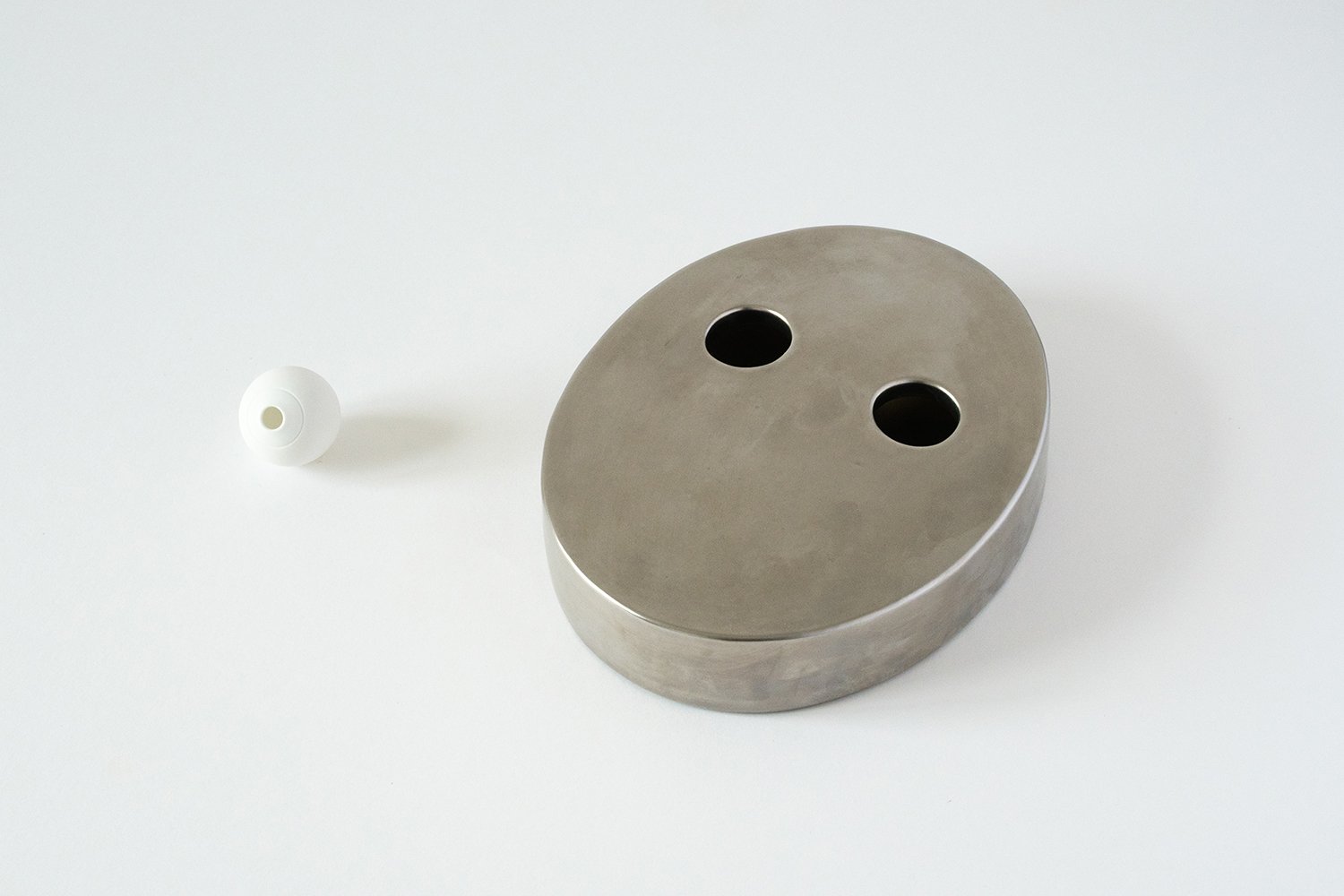
Eating was a central part of daily life in Jingdezhen. Meals were shared, frequent, and social, and the ceramics I was sourcing were designed to hold, serve, and circulate food. These objects are part of a system that supports nourishment, where vessels mediate between the outside world and the body. In this series, that relationship becomes more literal. Serving dishes become lungs, trays suggest organs, stacked elements form spines, and slip cast forms act as eyes or internal structures. The body is not depicted directly, but assembled from the same objects that feed it, linking consumption, care, and transformation. The vessels that carry food mirror the body’s own role in processing and converting it into energy.
Some elements were made by specialists, including mould makers and ceramic box makers, while others were cast, glazed and finished by me. Industrial processes such as PVD coating sit alongside hand glazing, reflecting the coexistence of traditional and contemporary techniques in Jingdezhen. The resulting works sit between still life, anatomical model, and self portrait, where the body is implied but never fixed.
The experience of working in Jingdezhen made visible the many roles involved in ceramic production, from clay preparation to making, glazing, and firing, often carried out across small studios and individual specialists. This collaborative structure expands what it means to make a work, while also raising questions about authorship, labour, and access, particularly as a Western artist able to enter this system temporarily and economically. The works hold this tension, between opportunity and reliance, visibility and anonymity.